Per person with 2 participants
from €820 / person
 EN
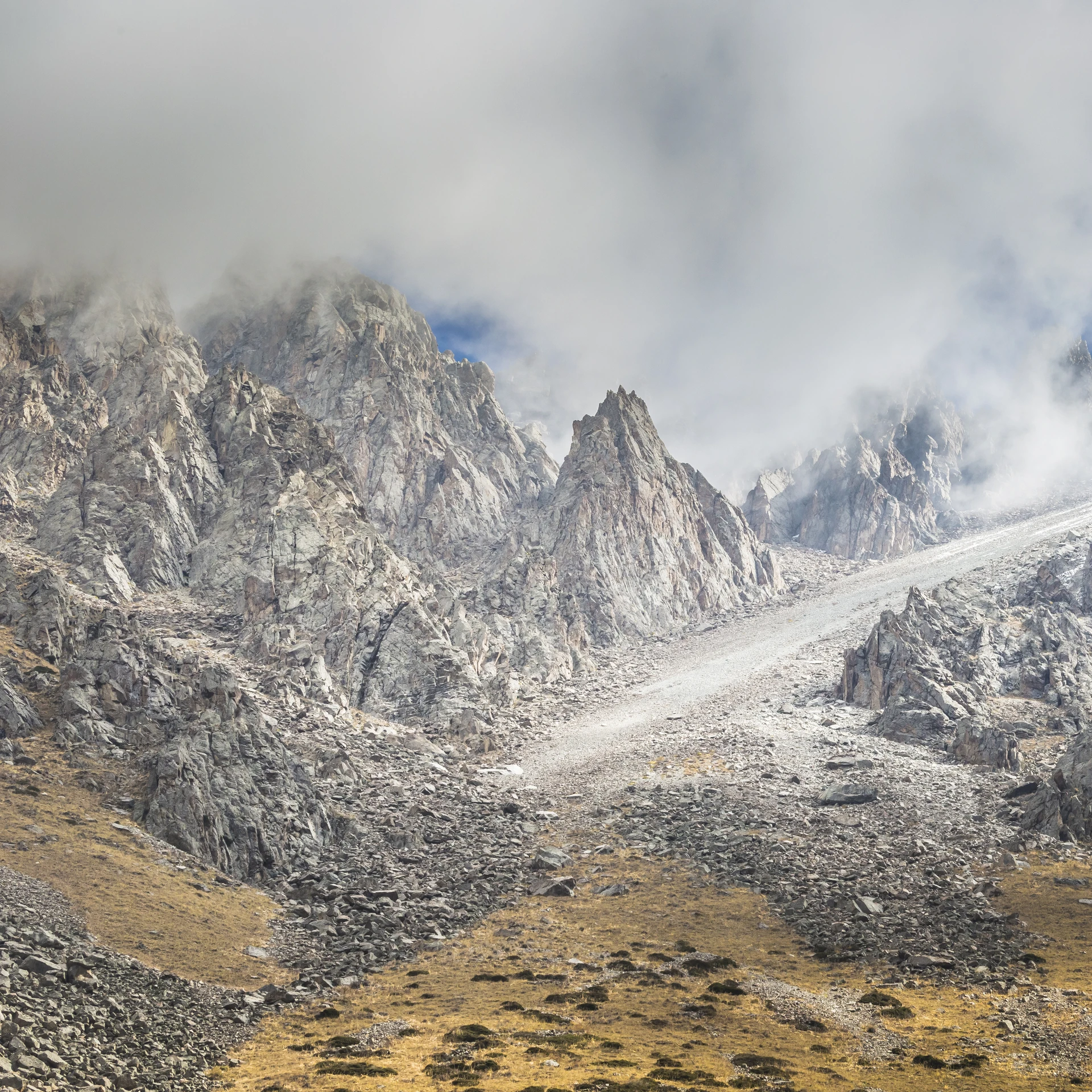
Rock practice, rope systems and evening route reviews at Ratsek Hut: this seven-day Ala-Archa course puts lessons into practice on real climbs.
Choose among three levels: foundations up to 2A, progression up to 3A and advanced ice climbing up to 3B. The appropriate level depends on experience, with a base around 3,400 m. Prices are per participant and differ for private instruction.
Walk to Ratsek Hut at approximately 3400 m, using the approach for acclimatization and an introduction to the mountain terrain.
Practise movement on rock and basic belaying under the instructor’s supervision.
Climb Uchitel Peak to apply movement skills and build confidence on a real mountain route.
Develop ropework, equipment handling and core belay and safety systems.
Apply the week’s skills on a 2A route on Ratsek Peak.
Practise glacier movement and the use of crampons and an ice axe.
Descend to Ala-Archa Alplager and transfer back to Bishkek.
Walk to Ratsek Hut, acclimatize and prepare equipment for technical training.
Practise rock climbing and belay systems on training terrain.
Climb a 2B route on Ratsek or a 2A route on Box Peak, depending on conditions and ability.
Refine rock movement and rope handling on more demanding terrain.
Apply the course skills on a 3A route on Ratsek Peak.
Train with crampons and ice axes on steeper ice.
Descend to Alplager and return to Bishkek.
Approach Ratsek Hut and acclimatize before the technical phase.
Work on advanced rock movement and belaying skills.
Move toward the foot of Korona Peak and prepare for the tower ascent.
Climb the first Korona tower on a route graded between 2A and 3A, selected for conditions.
Attempt the graded 3B ice route on Izyskatel, applying the full technical skill set.
Descend to Ratsek Hut and recover.
Walk down to Alplager, review the training and transfer to Bishkek.
from €820 / person
from €1,630 / person
Prices were converted to euros at the NBKR rate dated 15 November 2026, without markup. Dates, availability and final inclusions are confirmed before booking.
Ratsek Hut is a shared mountain refuge, normally 10–15 people per room. The first day includes an approximately 6-hour approach with about 1000 m of ascent from Alplager. Training uses real rock, snow and ice routes, with the instructor selecting the daily sequence for conditions and ability. Level 1 progresses to 2A, Level 2 toward 3A and Level 3 toward a 3B ice route. Warmer months favour rock and mixed alpine terrain; colder months shift the focus toward snow and ice. Private training can be arranged for a shorter period or the full course.
Level 1 welcomes beginners; Level 2 needs basic mountain skills and Level 3 technical climbing experience. Prepare for a roughly six-hour approach gaining about 1,000 m. Agree boots, harness, helmet, crampons, ice axe and sleeping equipment with the instructor in advance; personal equipment is outside the tariff. Mountaineering and mountain-evacuation insurance are required.
This is the supplier's personal equipment checklist. Confirm the kit for your course level and season with the instructor; personal equipment is not included in the course price.
Yes, Level 1 is designed for beginners. Levels 2 and 3 require relevant practical experience; the appropriate level is selected after discussing your background.
Yes. Technical sessions are put into practice on routes, and each level culminates in a graded summit ascent when conditions permit.
They belong to the Russian/Soviet alpine grading system used in Central Asia. Depending on level, the course progresses to 3A–3B routes. Describe your experience to the instructor if you use another grading system.
Yes, individual instruction is available on flexible dates. The pace and content are adapted to your experience and goals.
The main base is approximately 3400 m, and the program includes acclimatization. Tell the team beforehand if you have not been above 3000 m or have previously had altitude difficulties.
The course runs year-round with seasonal adaptations. Warmer months offer more rock and mixed routes; colder months focus more on snow and ice.